

What Is Customer Experience?
THE TRUE DEFINITION OF CUSTOMER EXPERIENCE
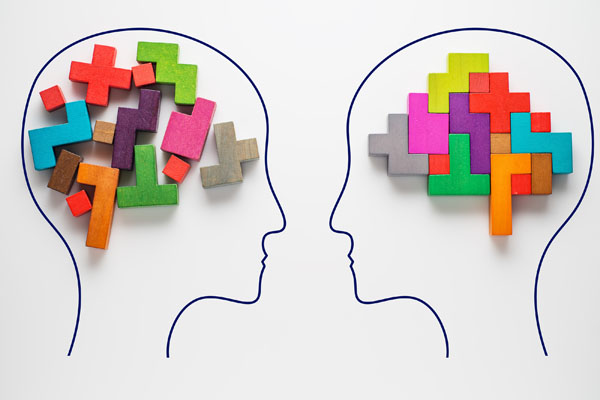
Many organizations make the mistake of believing that a Customer Experience is just about the rational aspects including price, how quickly things are delivered, how quickly you answer the phone. This is wrong. Your Customers are people. This means you need to look beyond the rational experience. Hence this definition of Customer experience:
A Customer Experience (CX) is a Customer’s perception of their rational, physical, emotional, subconscious and psychological interaction with any part of an organization. This perception affects Customer behaviors and builds memories which drive Customer Loyalty and affects the economic value an organization generates.
We discuss what CX is on our podcast The Intuitive Customer, this is a great free resource to help educate you on the topic.
We are also very proud that Beyond Philosophy have been selected by the Financial Times (FT) as one of the best management consultancy companies for 4 years in a row. This is because we focus on driving value ($) for our clients.
We would recommend that you:

HOW CX CAN IMPROVE YOUR ORGANIZATION
How do I get results?
If you are new to this subject or you are looking to improve your CX but not sure what to do, we can help. One of our clients, Maersk Line, improved their Net Promoter Score® by 40 points in 30 months which gave them a 10% rise in shipping volumes. We have further examples and case studies of other organizations obtaining similar results by undertaking the methodologies that we use.
How did we do this? We start by undertaking specialized research with their Customers to determine what drives and destroys value (Customer Acquisition, Customer retention, Net Promoter Score®, etc.) and identify the hidden attributes of the customer experience. On completion, we then set in place the strategy and develop a customer experience statement that also defines the emotions that the organization is trying to deliver. These are the emotions indicated by the research that drive most value $$$.
The next step is to design the customer journeys and embrace the fact that customers are irrational and we therefore use the subconscious and psychological experience to undertake this work using Behavioral Journey Mapping. At the same time as implementing this we need to improve the customer centricity of the organization. Therefore we undertake a customer centricity assessment and put in place a series of recommendations that would enhance their customer centricity.

There are finally two other key critical areas to improve when undertaking a programme of this nature. To ensure all this activity is actioned you need to change the measures. So we define what the new measures that we are going to put in place. Clearly, you should be measuring the new experience that you are trying to deliver and this means measuring customer emotions.
Finally, you need to enable your people to be able to deliver this new experience and therefore train them on how to evoke the specific emotions that you have determined drive most value for you. Again, this is where the subconscious experience and understanding the psychology of what is happening with your customers is critical. We can train people on these aspects of the experience and particularly the verbal and non-verbal clues that a customer will give you that reveals how customers are really feeling. The training continues by demonstrating how to convert your customer from feeling whatever emotion they are feeling at the beginning of their experience to the emotions that drive most value for you at the end of their experience.
We would recommend that a conversation with one of our team in an informal setting to run through this in more depth would be very beneficial.
LinkedIn Connect

Connect on X
Contact Colin
About Colin
Visit the Blog

The Beyond Philosophy team has helped many organizations to improve their CX.
Maersk Line improved their CE by 40 points over 30 months, leading to a 10% rise in shipping volumes.
WHAT IS CUSTOMER EXPERIENCE?
RATIONAL EXPERIENCE
EMOTIONAL EXPERIENCE


CUSTOMER LOYALTY
CUSTOMER RETENTION


Colin can help improve your brand awareness, advocacy and customer experience.
Why not contact Colin now
to find out how?
Contact us now